We can’t bolt intelligence onto friction and call it innovation.
Today’s care journey is full of stops, starts, and digital dead ends. No matter how much technology we throw at the problem, until we recenter on the person, patients and caregivers will continue to face fragmented experiences. People don’t feel cared for when their experiences are fraught with complexity, and they lose trust in the very system meant to support them.
For payers—especially health plans focused on retaining members and managing costs—this isn’t just about experience. It’s about loyalty, retention, and the financial cost of mistrust.
Trust used to begin in the clinic through eye contact, bedside manner, and face-to-face conversation. Now, it begins long before care ever happens at the moment of curiosity when someone goes online to verify coverage, check in-network doctors, or estimate costs. The payer portal has become healthcare’s digital front door; however, this front door is not very welcoming for visitors because it is always locked behind a login.
The portal is the first place people decide whether the system knows them or forgets them. And, it’s where payers can differentiate themselves.
People live complicated, messy, and wonderful lives, moving through moments, shifting roles, and changing contexts. Any portal that doesn’t recognize that complexity becomes a barrier. By the very usage of the word portal - a web concept from 30 years ago! - we know this model is embarrassingly outdated. No amount of AI layered on top can change that.
This is the reality we must design for. In healthcare especially, honoring whole-human context is more than good design. It is the foundation of trust.
AI is not a magic wand
Across industries, including healthcare, leaders keep adopting new technology faster than they rebuild the foundation beneath it. With generative and agentic AI, that gap keeps widening. AI can be powerful, but in healthcare, power without trust creates risk.
If someone can’t find their benefits, navigate claims, or update information, an AI-powered widget won’t make them feel understood. A poorly designed portal that doesn’t know the person–subscriber, spouse, or dependent–doesn’t suddenly become valuable because AI makes a recommendation.
If the basic experience fails, the intelligence layered on top just becomes more noise, not value. In fact, the contrast between advanced technology and a clumsy experience only deepens mistrust.
When someone is lost in a portal, they don’t think, “The ontology behind this recommendation isn't accurate.” They think, “This health plan doesn’t actually know me. This system doesn’t value my time or care about my experience. Can I trust this company?”
AI enhances trust only when the human experience already signals respect, ease, clarity, and understanding. When this foundation is in place, an AI-powered nudge to a member has a better chance of being successful. But, if the front door fails, nothing behind it matters.
This is where the shift from system-designed tasks to user-defined goals becomes critical. Most digital health experiences still function as transactional menus—pay a bill, file a claim, message your doctor. Real human needs rarely map cleanly to predefined categories; people arrive with intent: my knee hurts, I’m confused about my bill. When systems require users to guess which button matches their need, friction escalates, and one wrong click often means restarting.
Here’s where AI acts as the interpreter. Instead of forcing users to figure out how their need fits into system language, AI can translate, guiding the user from the natural question to the correct workflow in a more seamless way.
The payer portal is now the trust contract
Once a back-office utility, the portal is now the front line of trust. No longer just a tool for follow-up, it’s how healthcare earns credibility in a digital-first world. The portal represents the payer, the provider, and the promise of access, clarity, and care.
A patient’s first impression says everything. And right now, too many payer portals aren't just falling short. They're actively eroding confidence before the journey even begins.
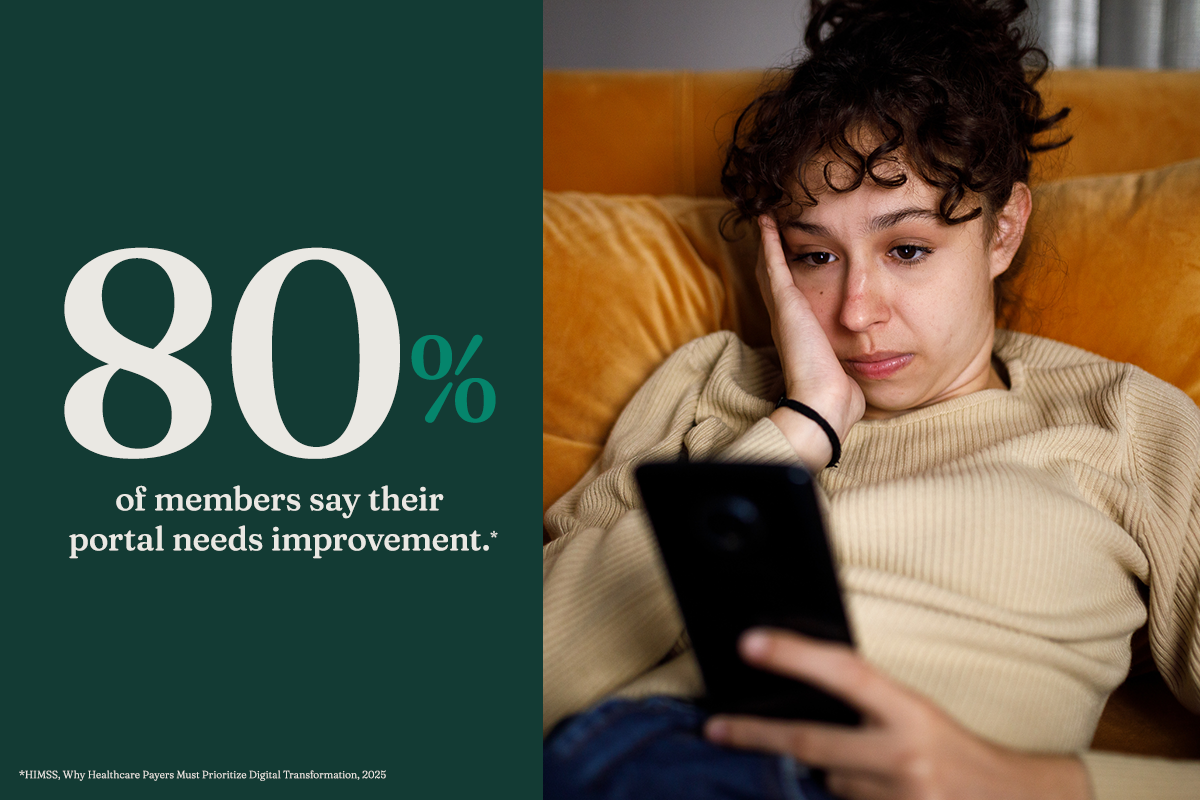
Most health plans earned a failing grade in usability, and more than half of consumers would switch insurers for a better digital experience. This, and other insights are found in MERGE’s recent white paper entitled “The Portal Payoff: A Study of 13 Leading Payer Portals."
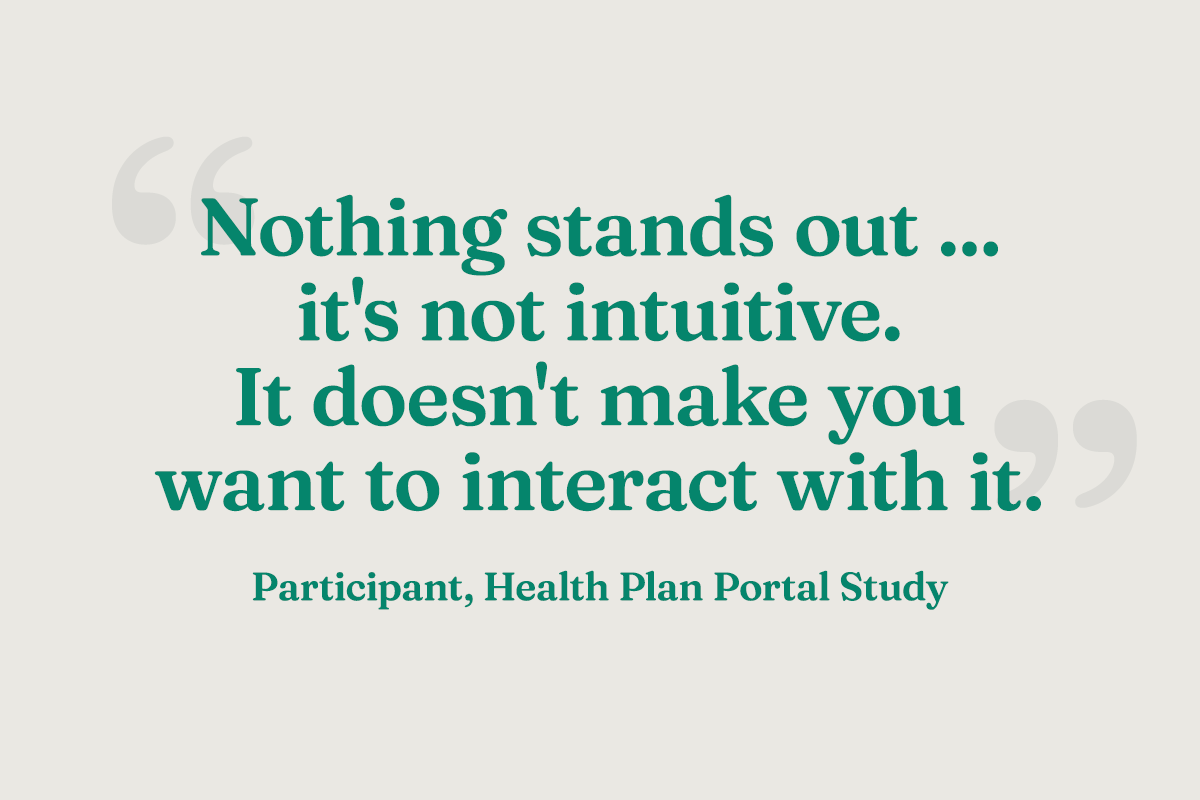
That’s a trust issue, not a tech problem for AI to solve. People trust systems that feel designed for them: personalized, intuitive, coordinated, and familiar. Members want simple ways to manage wellness benefits, easy-to-navigate self-service capabilities, and customized interfaces that know their history and benefits.
The portal has become the single most important touchpoint for member confidence, loyalty, and engagement. Improving it isn’t a UX project—it’s a trust strategy in a world where reassurance happens on a screen long before it happens in a waiting room.
The question for payers is simple: when someone logs in, do we treat them like a whole human or a file number?
Identity shouldn't reset at login
Just as trust begins before the clinic visit, a person’s role as a health plan member begins long before enrollment. Simply put: people don’t suddenly become members or patients. They are whole humans moving fluidly through roles from parent to sibling, member, patient, shopper, employee, friend, and more.
Their health journey spans payer and provider, clinical and financial, and personal and emotional. Yet our systems treat these shifting roles as separate identities instead of the same whole human. Pre-login marketing speaks to a person’s aspirations, and post-login portal messages speak in codes and claims.
We don’t hit invisible walls when we go from employee to patient, so why does our portal? Again, if the digital front door is always locked behind a login, that’s the opposite of welcoming and helpful for a user.
The person marketed to must be the same person supported after login. Their needs, signals, preferences, history, and intentions must travel with them. This is what allows healthcare to serve individuals in ways that adapt to their context.
When identity, trust, and experience are foundational, AI can finally amplify what’s working instead of disguising what’s broken.
A lived perspective on where we go next
I’ve spent my career at the intersection of health and technology, including leading consumer portal transformation at Cerner, now Oracle Health. I helped shift electronic health records from systems of record to systems of interaction, moving from data storage to dynamic patient engagement.
The next shift is even more fundamental: moving from systems of interaction to systems of trust and identity. This is the era where healthcare portals must know you, and behave that way.
- Where a member becomes a patient without friction.
- Where understanding travels with the person, not trapped behind systems.
- Where AI doesn’t replace human connection but finally gives it a way to scale.
Healthcare doesn’t need smarter systems first. It needs systems that know the human first. The organizations that win will be those that see their portal not as a digital tool, but as a living relationship with the whole human interacting with it.

The call to leadership
In competitive markets like health and wellness, trust is the ultimate differentiator. It’s not about having the most advanced model or the slickest AI tool. It’s about honoring the individual and removing the ridiculous barriers that make healthcare so much harder than it needs to be.
The future of healthcare is aware, empathetic, and intelligent–in that order. So, we need to:
- Build trust first–demonstrate benevolence.
- Carry identity forward.
- Design for the whole human.
- Then, let AI accelerate what’s already working.
At MERGE, we help organizations operationalize this shift by bringing together data, creative, and AI to deliver personalized, contextual experiences. Collaborate with our experts in a payer portal strategy workshop tailored for your organization. Or, download our white paper “The Portal Payoff: A Study of 13 Leading Payer Portals.”