Companies talk about culture as if it’s something they can engineer—own, brand, or roll out. Too often, it’s also used as a retention pitch: stay for the culture, even as budgets tighten, benefits shrink, and flexibility quietly disappears.
I’ve always been skeptical of the word “culture” because it’s often treated as something leaders can declare. In reality, culture is organic. You can’t fix it directly. You can only change the inputs and wait. Like a shadow, culture moves only when the object casting it moves first: leadership decisions, incentives, and what’s protected when it’s inconvenient.
Culture isn’t what you say when conditions are favorable. It’s what your systems reinforce when they aren’t.
Economic downturns expose culture
When the economy shifts, perks come and go. Talent scarcity, burnout, and pressure to produce more, faster—often with new AI tools—are real challenges. They’re also cyclical. And, while leaders will need to make tough decisions during these cycles, balance is key. Because one thing isn’t cyclical: the human need for consistency, clarity, and support.
Economic downturns don’t change culture. They expose it. They reveal what leaders protect when trade-offs get hard and what they’re willing to sacrifice to save a quarter.
Cutting the employee experience in tough times is often framed as pragmatism. In practice, it erodes continuity, institutional knowledge, and trust, which are the very assets clients pay for.
Markets rebound. Talent remembers.
Culture fails when it’s treated as the goal
Most culture initiatives fail because they target the wrong thing. Culture isn’t an input. It’s an output shaped by decisions, incentives, and constraints over time. A more useful analogy is data quality. Better inputs produce better outputs.
The same is true for culture. What leaders consistently reward, tolerate, and protect determines what the organization becomes. What matters is whether the culture actually supports the work to be done, and this is where many organizations get it wrong.
When culture and work are misaligned, friction is inevitable
Most organizational friction isn’t interpersonal. It’s structural.
It appears when companies ask people to do one kind of work inside a culture designed for another. We demand speed in consensus-heavy environments. Precision in “move fast” cultures. Accountability inside systems optimized for comfort.
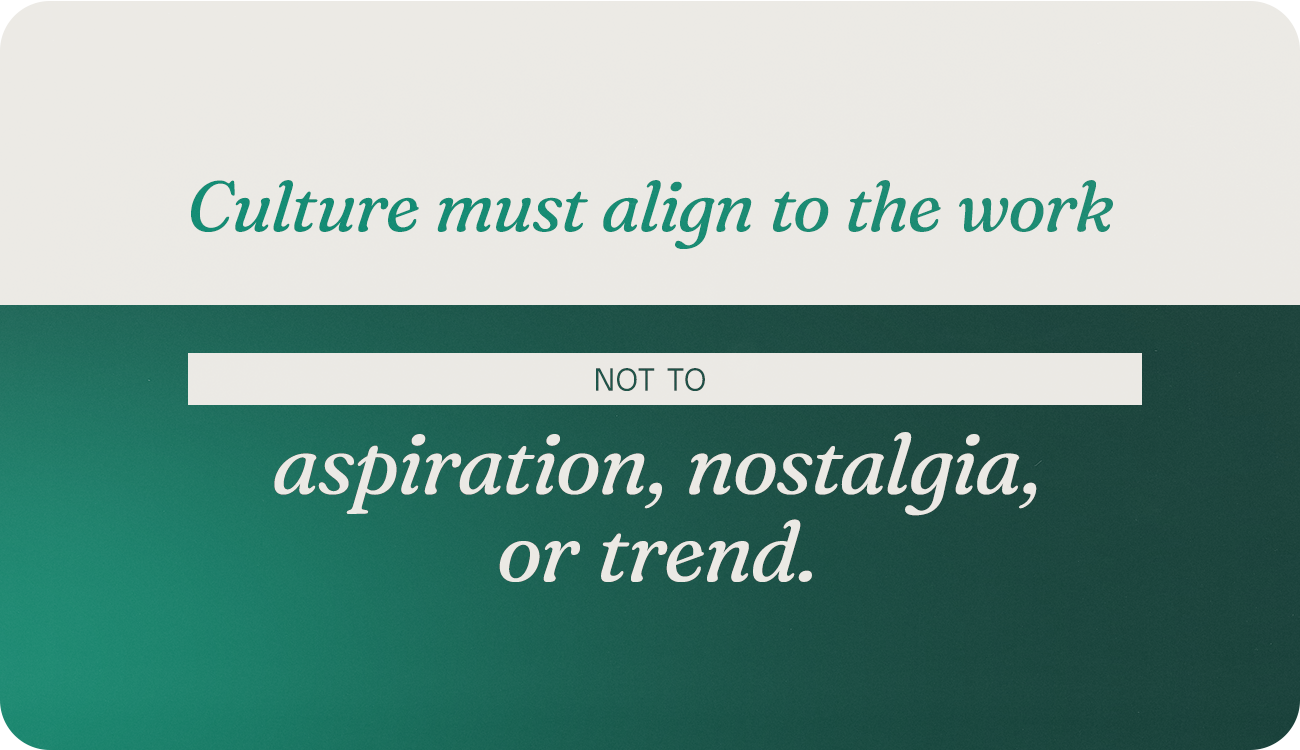
Then we blame people when execution breaks down. Culture must align to the work not to aspiration, nostalgia, or trend.
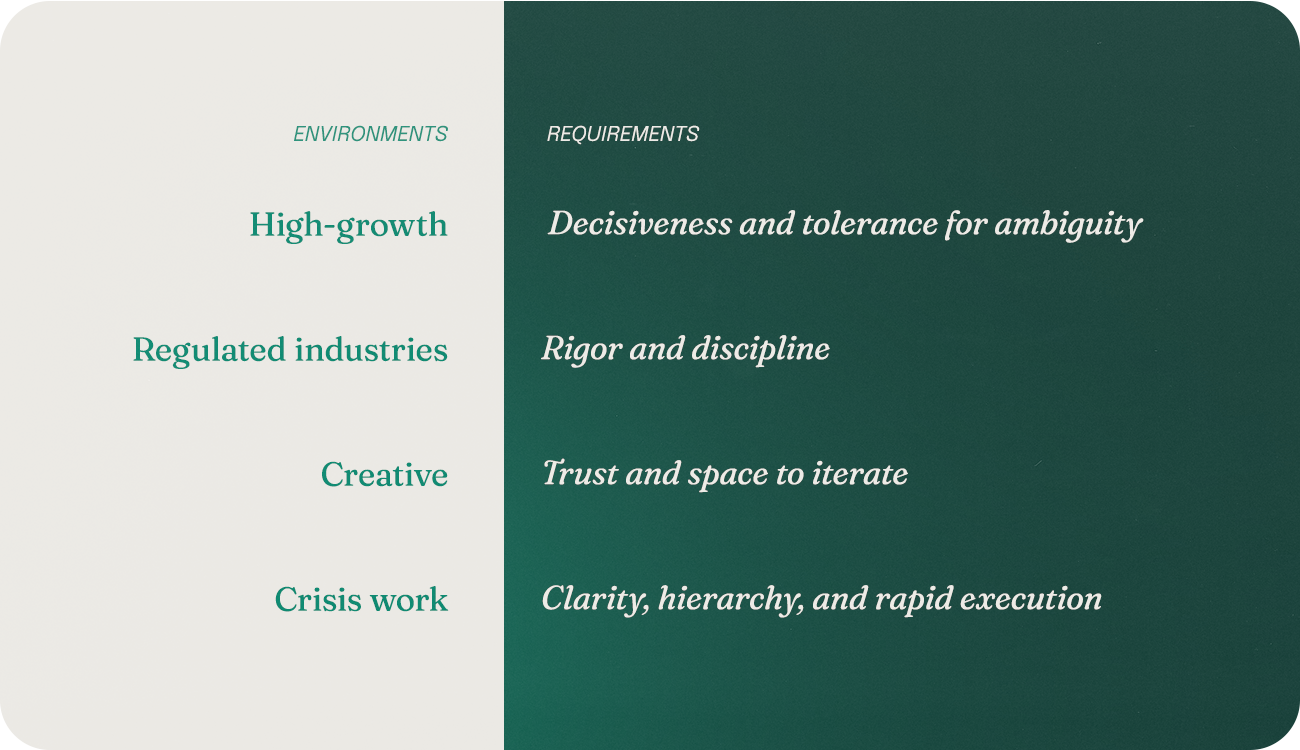
High-growth environments require decisiveness and tolerance for ambiguity. Regulated industries require rigor and discipline. Creative work needs trust and space to iterate. Crisis work demands clarity, hierarchy, and rapid execution.
Each requires a different cultural posture. Friction emerges when the posture doesn’t match the task.
Organizations say they value autonomy but punish deviation. They promote collaboration but reward individual heroics. They claim flexibility but design work that assumes constant availability. The result is drag, burnout, and quiet resentment not because people are resistant but because the system is incoherent.
A strong culture doesn’t eliminate tension; it channels it productively. It removes unnecessary friction by aligning decision rights, incentives, and norms with the real work at hand.
The inputs that actually shape culture
While culture looks different across companies, the inputs that shape it are remarkably consistent:
- How decisions are made
- How trade-offs are handled under pressure
- What’s protected when budgets shrink
- Who flexibility is really for
These signals compound, and over time, they are the culture.
Alignment in practice
At MERGE, we aim for a strong culture—one that is aligned with our work and our north star of inspiring health, wellness, and happiness. We partner with brands across the health and lifestyle ecosystem, and our work demands collaboration, creativity, and sustained performance.
That’s why we treat flexibility not as a perk but as a work style. We design our benefits and systems to support how the work actually happens, not how we wish it did.
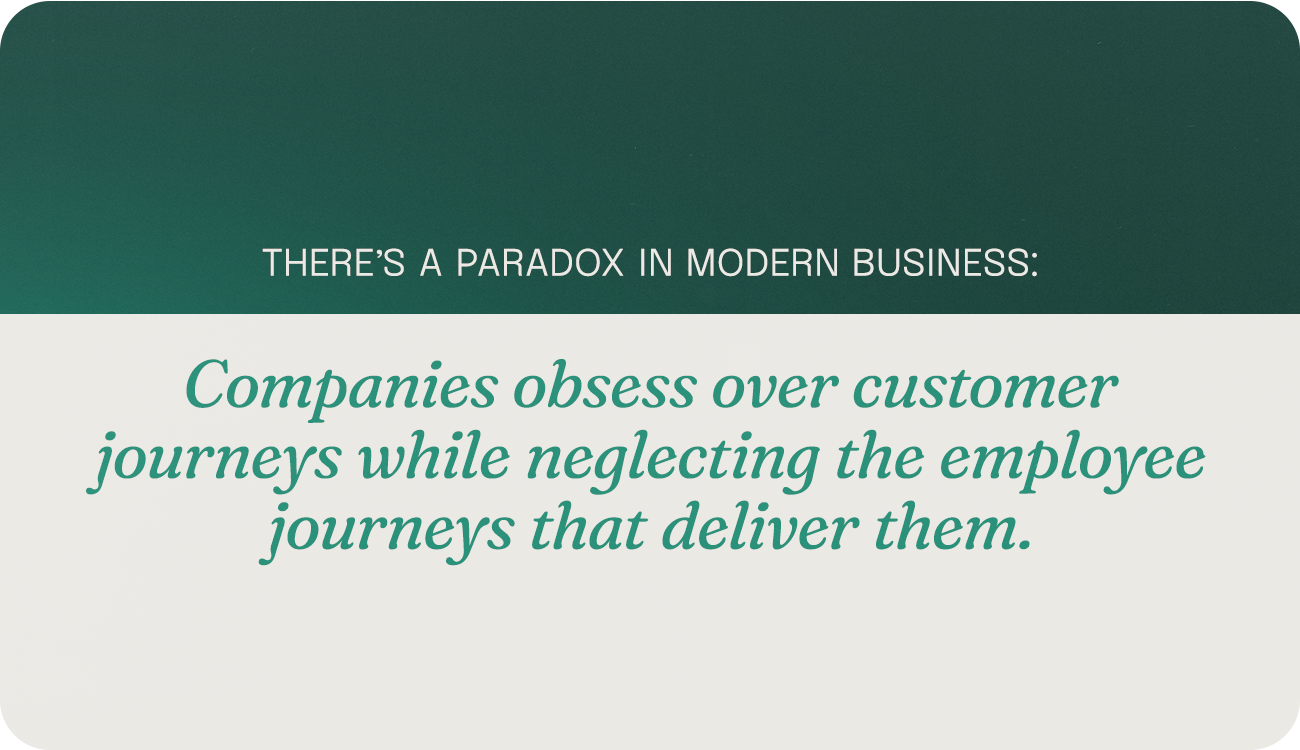
There’s a paradox in modern business: Companies obsess over customer journeys while neglecting the employee journeys that deliver them. We don’t believe you can authentically market health and wellness if you don’t practice it internally, and our approach reflects that belief.
Tools like personalized wellness programs and lifestyle spending accounts acknowledge a simple truth: Employees aren’t interchangeable units. They’re whole humans with different needs, rhythms, and goals.
Designing for that reality isn’t indulgent. It’s aligned.
Culture is a lagging indicator
It’s not always easy to know if you’re doing it right, but recognition and external validation can indicate the alignment is working. While awards aren’t the goal, they are signals. Employee tenure and referrals are also signals.
It’s time to stop managing culture like a program.
- Stop chasing sentiment.
- Start aligning systems to the work that needs to be done.
Because culture isn’t what you build. It’s what your organization becomes when alignment is real.
/cei_li_post2/cei_blog_thumbnail.png?h=436&iar=0&w=704&hash=3298B64C3E89B502792768039AA5EAA9)


